
Description
Overview
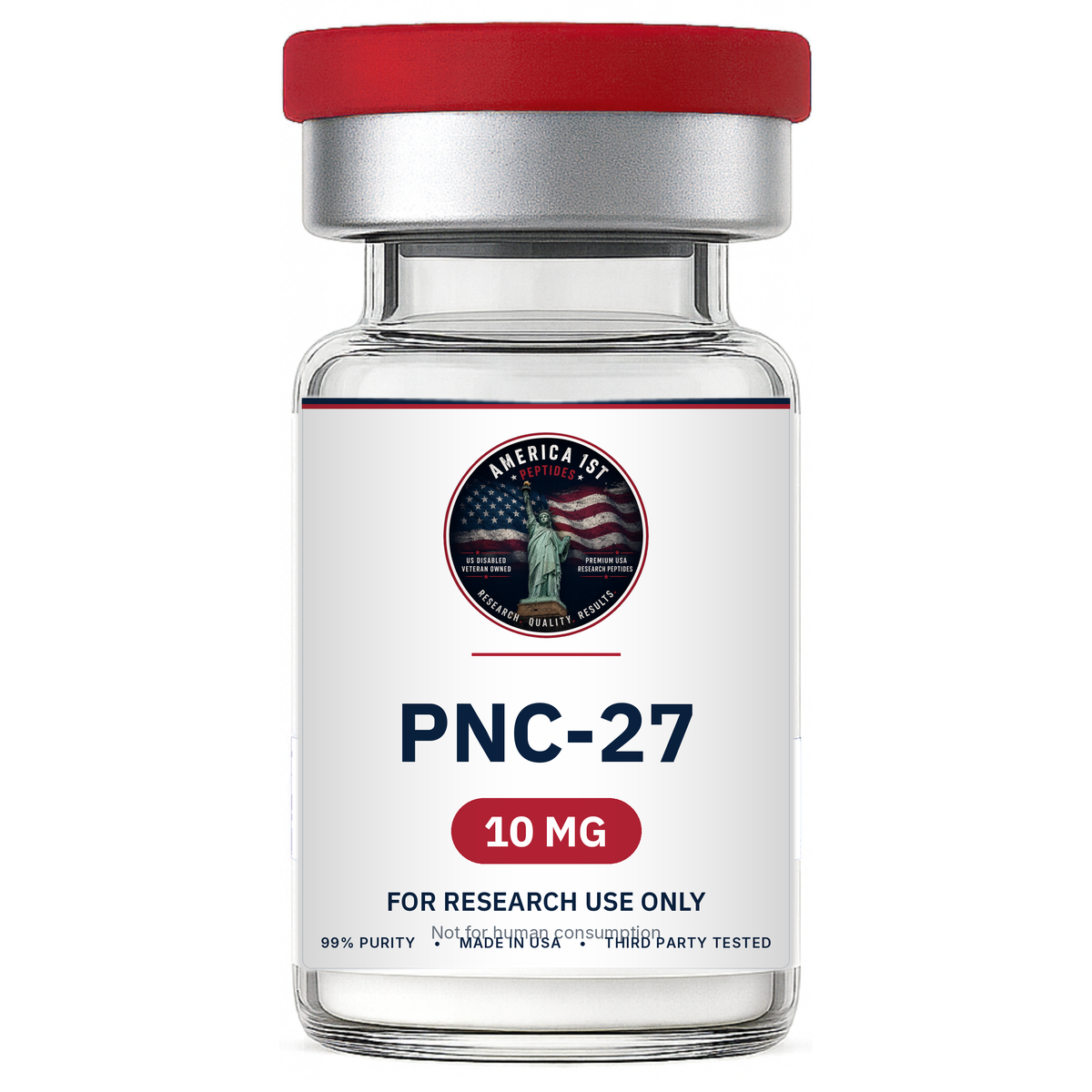
Researchers hypothesize that PNC-27 selectively targets cancer cells by binding to HDM-2 (human double minute 2) proteins, which are overexpressed on cancer cell membranes but not on healthy cells. Upon binding, the peptide may form transmembrane pores that compromise the integrity of the cell membrane, allowing ion influx and cytoplasmic efflux̶ leading to rapid necrotic cell death rather than programmed apoptosis.
Originally synthesized in 2000 during HIV-related research, PNC-27 demonstrated unexpected cancer-selective cytotoxicity, drawing attention to its therapeutic research potential.
Chemical Makeup
- Molecular Formula: C₁ ₈ ₈ H₂ ₉ ₃ N₅ ₃ O₄ ₄ S
- Molecular Weight: 4031.7 g/mol
Research and Clinical Studies Selective Cell Death
A 2009 study investigated whether PNC-27 interacts with non-cancerous cells. Results showed that the peptide formed 1:1 complexes with HDM-2 on cancer cell membranes, creating ring-shaped pore structures observable under immuno-electron microscopy. Normal cells without HDM-2 expression were unaffected, but when HDM-2 was artificially introduced, they became susceptible̶ supporting the selectivity hypothesis.
Membrane Lysis and Intact Peptide Action
In 2010, researchers fluorescently labeled both ends of the peptide to observe whether its structure remained intact during activity. When applied to breast cancer cells, yellow fluorescence indicated the peptide stayed intact as it lysed membranes. Control cells showed no such effect. Lactate dehydrogenase (LDH) assays confirmed increasing membrane lysis over time, correlating with peptide activity.
Non-Solid Tumor Cells
In 2014, studies extended to leukemia and other non-solid tumor cells. Researchers observed high HDM-2 expression in these cell lines, and PNC-27 induced pore formation and necrosis similar to that seen in solid tumors. Interestingly, these effects were p53-independent, indicating the mechanism relies primarily on HDM-2 interaction rather than traditional tumor suppressor pathways.
PNC-28 Comparison
PNC-28, a closely related peptide, has shown similar anti-tumor activity in ovarian cancer and mouse xenograft models̶ further supporting the structural basis for the membrane-targeting mechanism shared with PNC-27.
Leukemia Cell Lines
A 2020 study examined multiple acute leukemia cell lines (U937, OCI-AML3, HL60) and found uniform HDM-2 expression and consistent PNC-27 activity. These findings suggest that the peptide’ s pore-forming necrotic mechanism may apply across a variety of cancer phenotypes.
Disclaimer
All products offered by America1stPeptides.com are intended strictly for laboratory and scientific research purposes only. These products are not approved by the FDA, are not medicines or supplements, and are not sold for human consumption, medical treatment, or veterinary use. Any discussion of potential benefits is based solely on preclinical findings.

Reviews
There are no reviews yet.