
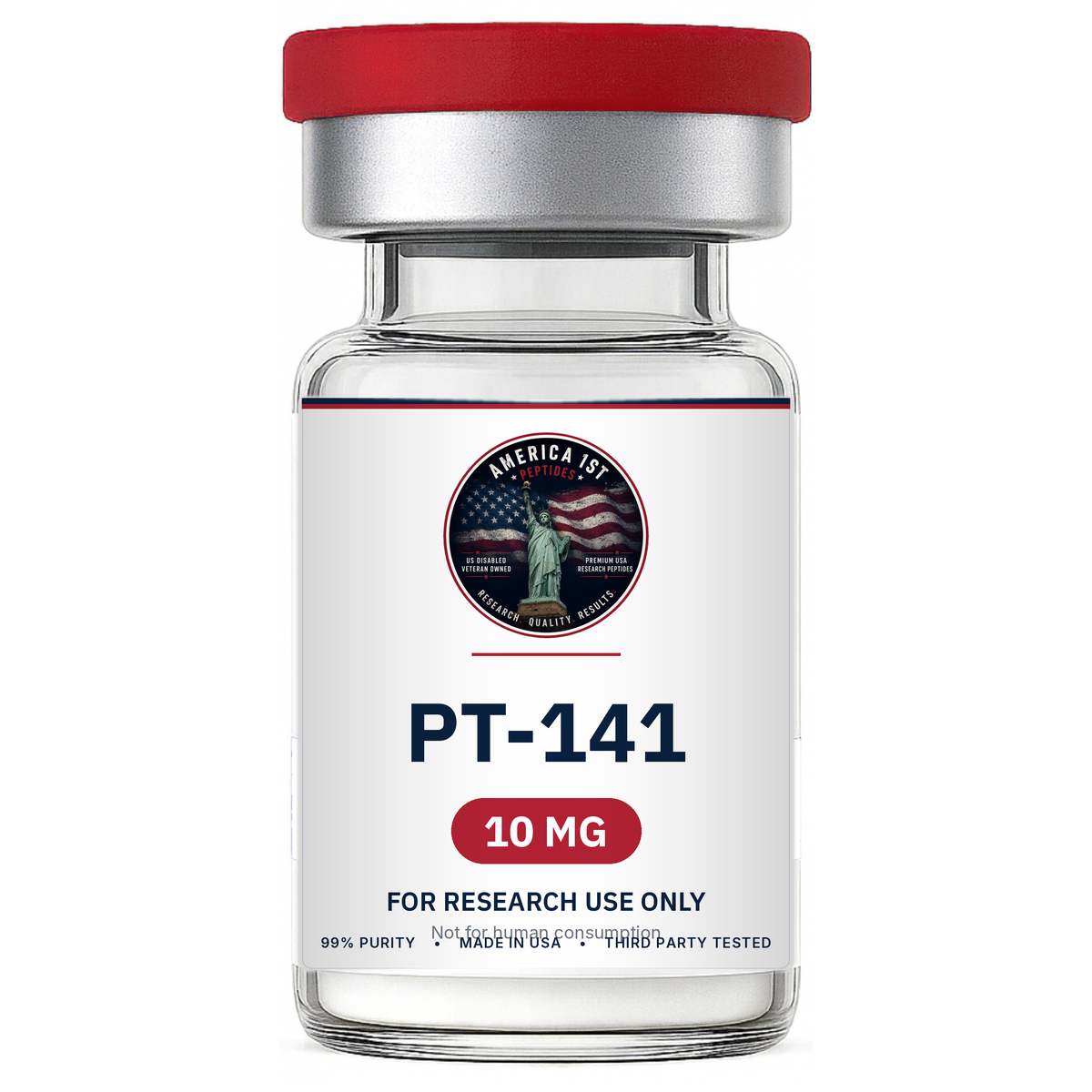
Description
What Is PT-141 (Bremelanotide)?
PT-141, scientifically known as Bremelanotide, is a synthetic peptide analog derived from alpha-melanocyte-stimulating hormone (α-MSH). It has attracted significant clinical attention for its potential role in treating hypoactive sexual desire disorder (HSDD) in both men and women—hence its frequent comparison to the “female Viagra.” Unlike phosphodiesterase inhibitors, PT-141 acts directly on the central nervous system rather than the vascular system, targeting the melanocortin-4 (MC4R) and melanocortin-1 (MC1R) receptors to stimulate sexual arousal and desire.
In addition to its sexual health applications, PT-141 has been explored for potential use in managing acute hemorrhagic conditions due to its tissue-protective properties and regulatory effects on blood flow. This peptide is a structural modification of melanotan II (MT-2), designed to enhance receptor selectivity and reduce undesirable side effects.
PT-141 Molecular Structure
Sequence: Ac-Nle-Asp(1)-His-D-Phe-Arg-Trp-Lys(1)
Molecular Formula: C₅₀H₆₈N₁₄O₁₀
Molecular Weight: 1025.18 g/mol
PubChem CID: 9941379
CAS Number: 189691-06-3

PT-141 Research Overview
1. PT-141 and Sexual Arousal
Extensive laboratory research demonstrates that PT-141 activates MC-4R receptors within the hypothalamus, the brain’s center for sexual behavior and energy balance. Preclinical studies in rodents have shown that stimulation of these receptors enhances copulatory activity and sexual motivation in both males and females.
In human trials, PT-141 administered via intranasal delivery produced positive results in men with erectile dysfunction (ED) who had previously shown inadequate responses to sildenafil (Viagra). Approximately one-third of participants achieved sufficient erection for intercourse, with outcomes strongly correlated to dosage.
While early female trials revealed a statistically significant increase in sexual satisfaction and reduced distress associated with HSDD, further development was initially halted due to regulatory challenges rather than safety concerns. Renewed clinical efforts have since been initiated under the product name Rekynda, utilizing subcutaneous administration in ongoing Phase II Reconnect trials, suggesting renewed potential for future therapeutic approval.

2. PT-141 and Hemorrhagic Protection
In 2009, a modified version of PT-141—known as PL-6983—was evaluated as a candidate therapy for hemorrhagic shock. The peptide’s dual activation of MC-1R and MC-4R receptors demonstrated the ability to reduce ischemic injury and preserve tissue integrity during periods of reduced blood flow. Importantly, intravenous administration produced minimal adverse reactions, underscoring PT-141’s favorable safety profile in preclinical settings.
3. PT-141 and Immune Response
Experimental models have shown that activation of MC-1R may confer anti-inflammatory and anti-fungal benefits. In a rat model of Candida albicans infection, PT-141 and related melanocortin analogs enhanced macrophage M2 polarization—an essential immune-modulating mechanism—thereby reducing inflammation and improving recovery outcomes. This suggests that PT-141 could hold promise as a foundation for novel immunomodulatory therapies.
4. PT-141 and Cancer Prevention Research
The MC-1R pathway also plays a central role in DNA repair and cellular defense against ultraviolet-induced damage. Genetic variants in MC-1R are associated with increased susceptibility to basal cell carcinoma and squamous cell carcinoma. Current studies indicate that targeted melanocortin modulation—via compounds like PT-141—could help restore normal DNA repair mechanisms and potentially reduce carcinogenic risk in vulnerable populations.
5. Future Research Directions
Beyond sexual health and hemodynamic applications, PT-141 has opened new research avenues in metabolic and neurological regulation. Deficiencies or mutations in MC-4R are implicated in certain forms of early-onset obesity, while MC-1R contributes to inflammatory and renal pathology. Ongoing studies continue to explore PT-141’s broader clinical utility as a neuroendocrine modulator with potential applications across multiple disease states.
Summary
PT-141 represents a versatile melanocortin receptor agonist with demonstrated central nervous system activity. Its unique mechanism of action sets it apart from vasodilator-based agents, making it a promising candidate for further investigation in sexual dysfunction, ischemic injury, immune modulation, and dermatologic protection.
Preclinical data indicate minimal adverse effects, limited oral absorption, and excellent subcutaneous bioavailability in animal models.
PT-141 offered by America 1st Peptides is intended strictly for laboratory and scientific research purposes only. This compound is not a drug, medication, or supplement, and is not approved by the FDA for human or veterinary use. All studies involving PT-141 must comply with applicable regulatory and ethical research standards.

Reviews
There are no reviews yet.